Grief in the Body: How to Cope When Your Physical Self Becomes a Source of Suffering
Grief can make reading hard. Want to listen to this article instead? Find its corresponding podcast episode here.
Grief doesn’t just happen in your heart.
It doesn’t just live in your mind.
Sometimes, grief hits you in the most inescapable place of all: your own body.
For many grievers, the body is the site of the loss itself—especially after injury, chronic pain, trauma, pregnancy loss, or a diagnosis like cancer.
Bodies can become constant living reminders of what’s missing, what’s changed, and what will never be the same again.
As fellow author and podcaster Lisa Keefauver said in our conversation on Grief Grower: “The home that my body is also the torture of my existence.”
Lisa knows this intimately. She’s not only a grief educator and therapist—she’s also a cancer survivor. After being misdiagnosed by six doctors and dismissed repeatedly for a year, she was finally told she had triple-positive breast cancer. What followed was a total upheaval of her physical self: a lumpectomy that removed the whole front part of her left breast, 12 straight weeks of chemo, 30 rounds of radiation, immunotherapy, and daily hormone-blocking medication she’ll be on for years.
Throughout all of it, she told me: “I felt like a prisoner in my own body. Betrayed by my own body. Grieving ease. Grieving peace. Grieving [a life of] non-pain.”
This article—inspired by our conversation—covers what body grief feels like, how to recognize grief in the body, what to do when you feel like a stranger in your own skin, and how to feel grounded and centered when you can’t use your body as a touchstone for mental, emotional, or physical safety.
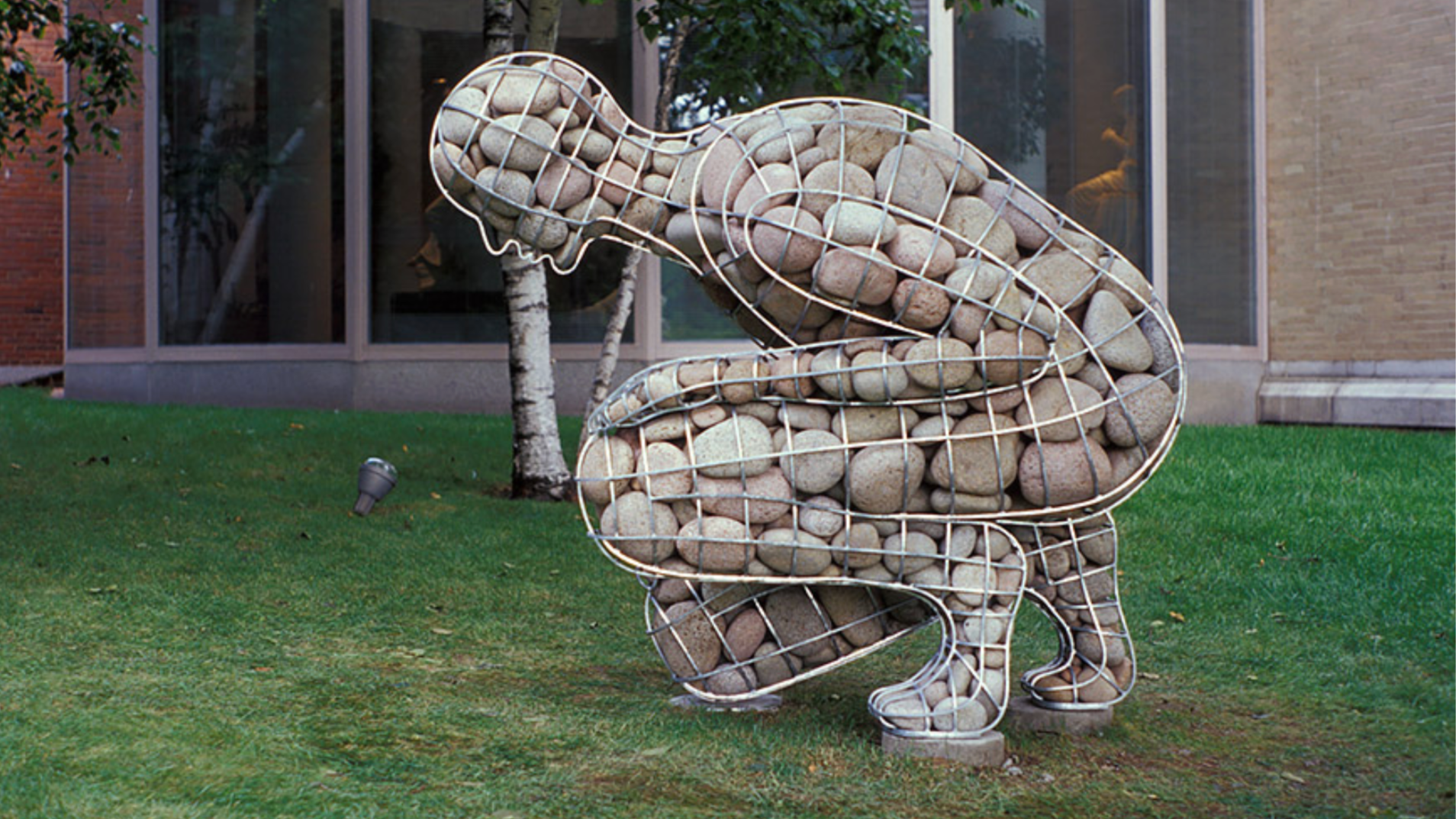
Raising Cairn by Celeste Roberge | Credit: Celeste Roberge
“Who the F*ck Is That in the Mirror?”: What It Feels Like to Grieve Your Body
In a Substack essay titled Who the F*ck Is That in the Mirror?, Lisa put words to something few people talk about: the experience of looking at yourself in the mirror after trauma, diagnosis, or treatment and not recognizing the person staring back.
Hair, skin, chest, belly, limbs, nails, nerve endings, weight—these are all things that can change during illness or grief. And they’re not just cosmetic. They are a part of who we know ourselves to be—our identity.
As Lisa reminded me during our interview: “It makes you begin to realize the connection we have to identity and the body—the way that we are showing up in the world.”
Bodies are so much more than bodies. They are the containers of our hearts, minds, and spirits. They are our only “home” on earth, and it can be stressful or upsetting when that home is sick or suffering.
Lisa described the shock of losing her hair after chemo—and how even that loss was layered. Her blonde hair had once represented the version of her who had survived widowhood. For her, it was a symbol of resilience. Losing her hair as she navigated breast cancer, felt like losing a piece of the self that had already been rebuilt. Sort of an “I-grew-to-love-this-only-to-have-it-be-taken-away-again” type of loss.
The Unique Pain of Cancer Grief and Medical Betrayal
For many people, cancer grief isn’t just about diagnosis and treatment—it’s about feeling betrayed by the medical system and even by your own body.
Lisa shared: “I knew something was wrong for an entire year. I had a lump [and consulted with] six different doctors. I had mammograms that told me we were fine. I had ultrasounds that told me we were fine.”
She knew something was off. But after a year of being dismissed, she was finally diagnosed—then swiftly expected to hand over her body to be treated the same system that had repeatedly failed her. Lisa said: “I now had to entrust this body to a system that had so consistently betrayed me and let me down.”
And, like many people grieving after a major loss, her cancer grief reawakened old griefs too. Lisa’s husband died just two and a half weeks after being diagnosed with a grapefruit-sized brain tumor—after his symptoms had been dismissed as mental health issues for a year. The pattern repeated in her own life, deepening her body grief. She expressed during our podcast conversation: “Can I even trust my body? Can I trust what I know about my body? Can I trust the people whose job it is to know something about my body?”
Of course, this sense of grief and betrayal only compounds for people who have experienced other losses via the medical system—such as medical malpractice or the death of a loved one—and people who are marginalized and tend to receive poor treatment already—such as women, BIPOC folks, disabled folks, neurodivergent folks, low-income folks, queer folks, and immigrants.
Said another way: What may look like an ordinary doctor’s appointment to one person can be a loss-stacked interaction with a traumatizing system for another.
I don’t speak about this often, but for many years in childhood I endured unnecessary pain and anxiety at the dentist’s office. Because my baby teeth had long roots, they didn’t fall out on most dentists’ prescribed timelines and many were extracted. One summer as a teenager, I had a total of nine teeth pulled.
Despite crying, shaking, and making repeated requests for more or different numbing agents, no dentist listened to my need to try something different. Some laughed as they worked on me. One even told me that my dental anxiety was “all in my head.”
It was only years later—while I was undergoing a root canal—that an endodontist pointed out that because of my ancestry, I likely have the recessive “redhead gene” which often carries a high resistance to local anesthetics and a need for higher pain management during procedures. In her chair, under her care, I only received one “zap” of nerve pain and went home empowered with this new information.
While I now tell every medical professional I encounter about my high resistance to anesthesia and history feeling intense pain, I still grieve for the younger version of myself who was not listened to and the lifelong anxiety I carry surrounding the medical system.
When Your Body Becomes the Site of Your Suffering
What makes embodied grief so painful is that you can’t escape it. You can’t distance yourself from your physical self. There is no leaving your body behind or “putting it on the back burner” to process later.
As Lisa said in our interview: “This is the tricky dynamic of any kind of [body] trauma or embodied grief… the places we might lean on to soothe our nervous system are the exact places where we don't want to go.”
Even grounding exercises, which are so often offered as grief tools, can feel like a slap in the face. She reiterated: “Nobody wants to ground their feet or turn inward to their breath when this home [of the body] feels so difficult [to connect with].”
For people whose grief is wrapped up in illness, disability, surgery, trauma, or diagnosis, the body may not feel like a center of calm or peace—it may feel like the source of suffering.
I noticed that many wellness practitioners—from grief therapists to yoga teachers—stopped using mindful breathing as a grounding tool during the height of the COVID-19 pandemic. For many, its connection to the breath was no longer comforting; it was traumatizing. Something as simple as breathing in and out reminded people of their loved one’s final moments, brought up visions of people with the virus gasping for air, or simply prompted them to think about what a privilege it was to breathe freely when others were suffering.
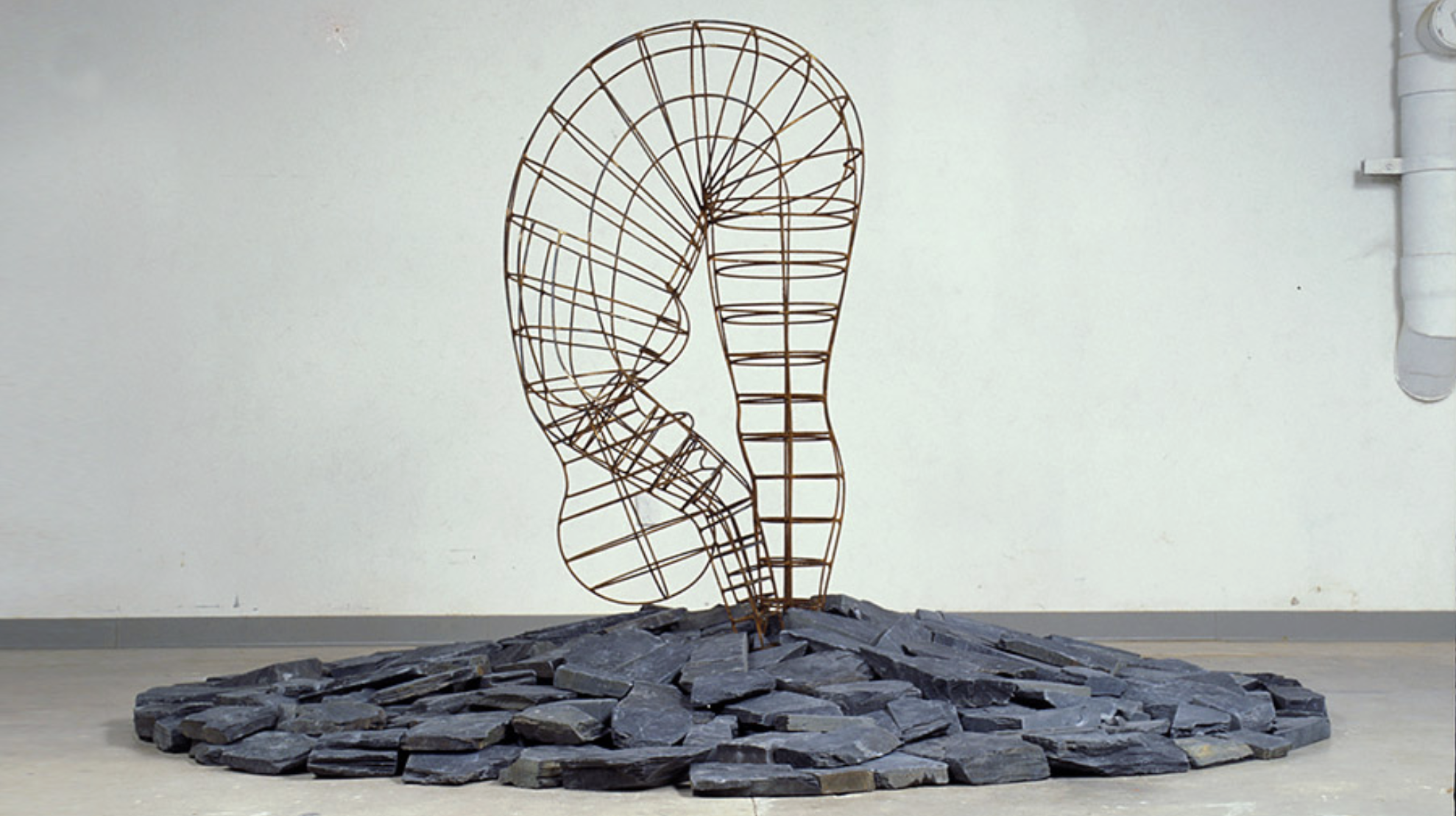
Uttanasana by Celeste Roberge | Credit: Celeste Roberge
Coping with Society’s Pressure to “Be Grateful That You’re Still Alive”
One of the most validating parts of our conversation was Lisa’s righteous anger at people who suggest that feeling grief over your body is somehow ungrateful—that you should be happy to still be alive, no matter the price of your survival.
She named a common cultural pressure to say “at least” or to find the silver lining.
For instance:
“At least the cancer was treatable.”
“At least you survived.”
“At least you can still have kids.”
“At least you have insurance.”
But as Lisa put it: “If I don't honor the truth of the grief of my hair, of my breast, of my womanhood… then I'm not me.”
Gratitude and grief can coexist. You can be thankful to be alive and heartbroken about what your survival cost you—whether physically, emotionally, mentally, financially, socially, or spiritually.
In other words, coping with body grief is “both, and.”
Embodied Grief Coping Tools: What Can Helps You Come Back to Your Body
When asked how she learned to cope with embodied grief, Lisa was honest: she didn’t always try to be in her body. Sometimes, it was about stepping outside of it—gently.
Here are the practices she shared that helped her survive:
1. Take a Beauty Walk (or a Beauty Sit)
Lisa used the term beauty walks to describe gentle excursions into nature or public life where her goal wasn’t healing or introspection—it was just to notice the beauty that was present around her.
She referred to this as “putting the home of [my] body in the home of nature.”
For you this could take many forms, such as observing something you find beautiful, such as a garden of flowers, a flock of birds, a sunrise, or a body of water like an ocean or lake.
You could also do something more active, such as giving away a bouquet of flowers every week or every month—or performing a random act of kindness whenever the moment strikes you.
Even when her body didn’t feel like a safe place, the larger world reminded Lisa that beauty, change, and survival were still possible. Perhaps the same could be true for you too.
2. Give Yourself a Small Creative Challenge
Sometimes, giving yourself a mini task or a fun “side quest” can help you zoom out from your body while still participating in life.
Lisa described hunting for specific colors with her camera: “I would just decide I’m going to go out and look for the color orange and try to capture as many orange things as I could.”
Creative challenges like this don’t have to be big. They could be as small as taking photos of orange things. Or collecting 15 interesting rocks every week. Or watching a hummingbird for thirty seconds. Or listening to a whole album from start to finish. Set a micro goal that feels possible. But more than possible, it should feel uplifting. Not necessarily happy or healing—just lifting yourself up one more inch emotionally from where you are right now.
If you’re struggling to come up with ideas, my blog about 8 Small But Helpful Ways to Make Grief a Tiny Bit Easier is a good place to start.
3. Mirror Work
Later in her treatment, Lisa practiced standing in front of the mirror, placing a hand on her heart, and saying: “Thank you, body.”
Even while crying. Even when what she saw felt foreign or painful. Even when she really resented all the ways her body had changed.
She said during our chat: “There was something really important to me about ‘both, and.’ My body [does not feel like a] home and also thank you body for bringing me here today.”
You might try this too, looking in a small mirror, at just your head and shoulders—or in a full-length mirror with your fully body in view, and saying, “Thank you, body.”
To be clear, this isn’t toxic positivity or glossing over everything you’ve endured. It’s combining the truth of your loss with the reality that you are right here, right now. It’s grief with gratitude, sorrow with survival.
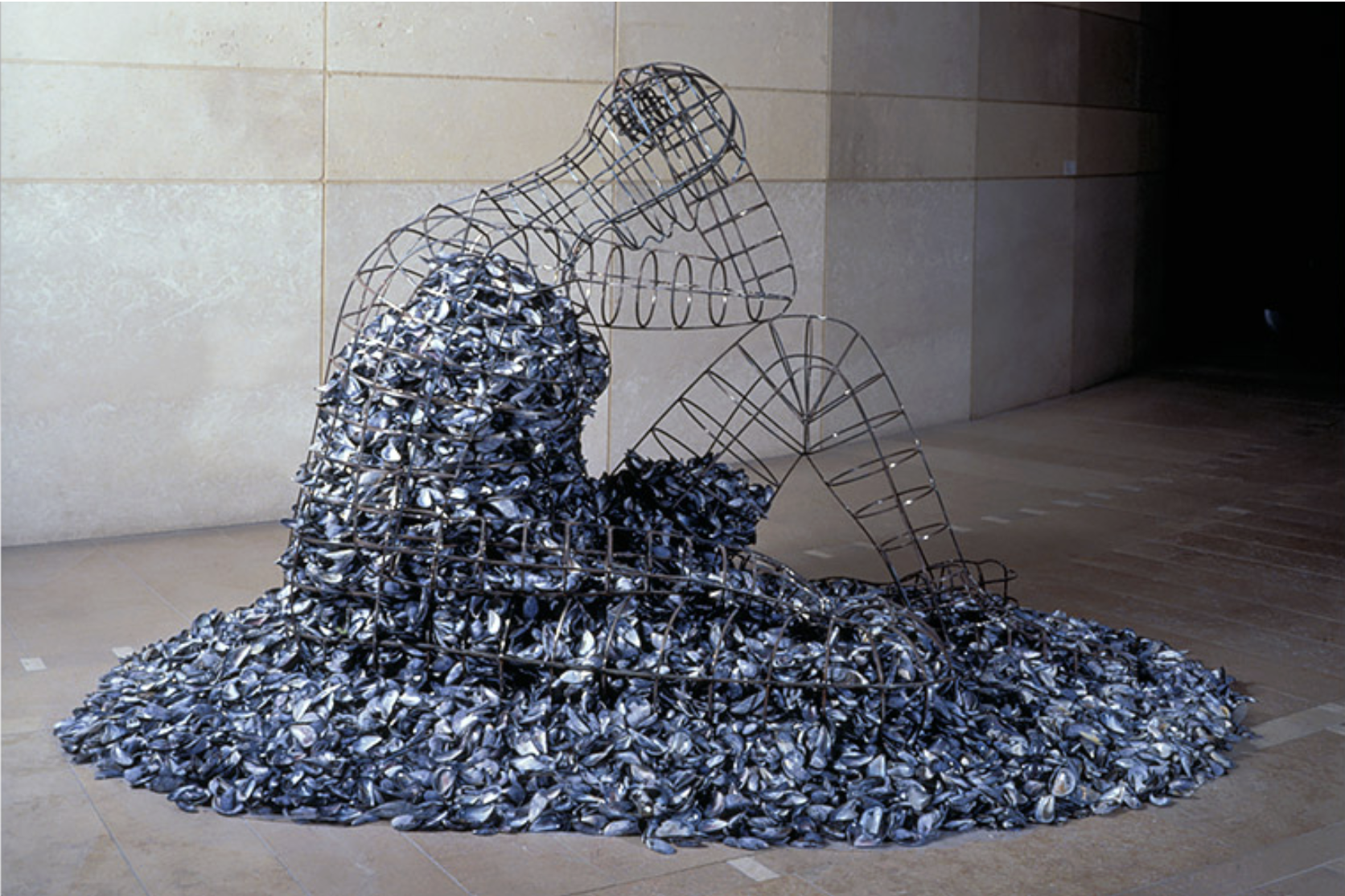
Body/Sea by Celeste Roberge | Credit: Celeste Roberge
Closing Thoughts: Body Grief Is Real, Valid, and Worth Naming
Lisa shared with me that one of the most powerful things anyone going through body grief can do is name it: “Not just at the intellectual, like this sucks, but at the embodied place, and to weep and mourn for that.”
You are allowed to grieve your hair, your nails, your chest, your bones, your senses, your strength, your comfort, your energy, and the way things used to be.
You are also allowed to grieve the ease of living in a body that did not demand so much attention, care, pain management, and effort.
You are not “too much” for feeling heartbroken about what your body has lost, or what it can no longer do.
And if your grief in the body brings back older grief—grief for a person who died or a life you can no longer live—that, too, is a part of the process.
But even in the midst of pain, there are ways to find the possibility of feeling at home in your body again. Not the body you had before. Not the life you had before. But a life and a body that can hold grief and beauty and loss and survival all at the same time.
As Lisa put it: “[Coping with body grief] is a practice. This is not a ‘I heard it on a podcast or read it in a book and now I live into that all the time.’ This is a sustained meditation that we must take.”
If you’re grieving your body right now, I hope you’ll be gentle with yourself. You live here now.
And even in your own personal winter—when it seems like everything is barren, broken, hollow, cold, and empty—there can still be beauty, resilience, and a different kind of strength here too.
You can listen to my full interview with Lisa Keefauver here.
