11 Ways to Sleep Better After Loss: What to Do When You Can’t Sleep or Sleep Too Much
Grief can make reading hard. Want to listen to this article instead? Find its corresponding podcast episode here.
When loss rips through our lives, our relationship to sleep can radically change—sometimes overnight!
Either we can’t fall asleep no matter how exhausted we feel… or we can’t get enough sleep. Sometimes both are true in the same week—or even in the same day.
Simply put: grief and sleep are deeply intertwined.
Whether you’re lying awake at 2 a.m. with a racing mind or waking up after 13 hours of sleep and still feeling bone-tired, it’s all part of the landscape of grief. But that doesn’t mean you have to suffer through sleeplessness or over-sleeping without support.
Below are 11 grief-informed ways to sleep better—divided into three helpful sections—so you can help yourself be able to rest again, even if nothing in your world feels restful right now.

What to Do During the Day to Help You Sleep at Night
If you’ve been grieving for more than one night, you know that a grieving brain and body doesn’t automatically switch to “off” at bedtime—as much as you might like it to.
If your days are chaotic and overstimulating or numb and motionless, your nervous system is likely still jittering when your head hits the pillow. These daytime practices help regulate your body and brain so you’re not carrying so much into the night.
1. Move Your Body—Even a Little
Gentle movement, like walking, yoga, or dancing to a song in your kitchen, can release some of the griefy stress and restlessness that builds up during the day. To be very clear, this is not about burning calories or toning muscles; it’s about shifting your focus from the mind-spinning and heart-aching of grief to the biological need of your physical body to be soothed and regulated in the face of grief.
Consider how you might physically comfort a suffering animal or a crying baby. Then picture yourself as that living creature in need. Rubbing your arms and legs, patting your chest lightly, or bouncing in place can all serve as ways to settle your nerves during the day. Of course, you’re welcome to run, climb, do jumping jacks, or lift heavy weights if you want (In 2024, I was featured in an article about running to cope with grief!), but vigorous exercise is not the only movement that can tucker you out. Movement of any kind can help your body calm itself and recognize that it’s safe enough to rest later.
Bonus tip: Try exercising outdoors if you can. Natural light and movement together can help reset your internal sleep-wake clock.
2. Set Small, Repeatable Rituals
Grieving people often feel unmoored and untethered from daily life—like the world has turned upside down. Anchoring yourself with repeatable, small actions (like always having tea at 10 a.m. or checking the mail at 4 p.m.) creates rhythm and adds a sense of order to your day—especially when grief makes everything feel orderless. The more grounded and consistent your day feels, the more your body believes it can let go at night.
You’re welcome to fold your grief into your small, repeatable ritual if you like. Inside Life After Loss Academy, my online course + community for grievers, I teach the 1% Rule, where we devote just 1% of your day (or about 10 minutes) to spending time with grief. This could look like lighting a candle, journaling, listening to a couple songs, talking to a deceased loved one, or engaging with a grief book or podcast. Once your ten minutes is up, you’re free to go about the rest of your day knowing that you’ll literally “see your grief tomorrow.” Learn more about the course and the 1% Grief Rule here.
3. Take Naps, Shame-Free!
If your body is begging for rest during the day, it’s not being “lazy;” it’s doing the grueling work of grief. Short naps (around 20–30 minutes) can help restore your energy and keep you going until bedtime. The key is not to punish yourself for needing them. If thoughts like, “Jeez. Why am I so tired? I should be able to power through the day,” pop into your head, consider reframing rest by thinking or saying out loud, “I am doing everything I used to do, now with the added weight of grief. That’s heavy, and it’s okay to need more rest right now.”
4. Limit Digital Overstimulation—Like Social Media, TV, and Movies
You don’t need to avoid the world entirely to get better sleep—but it does help to avoid overstimulation. Mindlessly doomscrolling, getting into fights on social media, or binge-watching loud, intense, or violent media might serve as a temporary escape from grief, but these activities often rev up your nervous system long after you log off or turn off the TV.
Try to balance social connection and entertainment with quiet time or soothing media. Many of my grieving students inside Life After Loss Academy report limiting social media after loss and re-watching lighthearted comfort shows that they’ve seen before like Schitt’s Creek, Friends, or The Golden Girls—my personal favorite.
What to Do Right Before Bed to Help You Sleep
Nighttime is often the hardest for grieving people. The distractions and to-dos of the day are gone. The world is quiet. And the ache of grief is at its loudest. These nighttime rituals can help signal to your body that it’s time to rest.
5. Say Goodnight to Your Person—or to Your Grief
Many of my grieving clients find comfort in a ritual I call “tucking your grief into bed.” Just like a childhood bedtime prayer, you can say goodnight to your loved one who died—or to your grief—whether out loud or silently. Tell them what happened in your day. Ask to be protected. Talk about the dreams you’d like to have or the type of rest you’d like to get in order to get through tomorrow.
For instance:
“Hey mom. As I head to bed please keep me safe from nightmares and show up in sleep in ways that feel beautiful and restful. I miss talking to you so much and thought of you today when I found a penny on the ground at the train station. I love you. I’ll talk to you again tomorrow.”
Or, for non-death losses where you’re tucking in your grief:
“Dear grief, Thank you for another day spent together—whether I wanted you around or not. I know you never really sleep, but I hope you can find your own kind of rest as I find mine. If you choose to show up in my dreams, please let the memories you bring be kind and gentle. I would especially like to dream of [insert ideal dream here]. I’ll see you again tomorrow.”
This small ritual can bring enormous peace to your heart and nervous system—and give your grief a metaphorical place to rest for the night.
6. Journal with Intention
If your mind races the moment you lie down, give it a solid place to express itself before bed.
Try a five or ten-minute journaling practice answering a single prompt.
For example:
What do I need to get out of my brain before bed?
If I could dream about my person—or my grief— tonight, what would I want that dream to be like? (Check out my blog about grief dreams or my Grief Grower episode with grief dreams expert Dr. Joshua Black for more on invoking positive grief dreams.)
What is one interaction today I would like to release?
What small, beautiful thing did I see today?
You might even use your moments before bed to practice something I call Two S’s Journaling, which I teach inside Life After Loss Academy. It’s a gentle way of tracking your progress and growth in grief without needing your success to be linear, like society often insists. Two S’s Journaling is a practice I did for more than four years after my mom died as a way of noticing how I was growing, what I was interested in, and how I was healing as I navigated life after loss.
7. Use Insight Timer (or Another Meditation App) for Gentle Sleep Support
Insight Timer is a free app that offers thousands of meditations, sleep stories, podcasts, and calming music tracks from mindfulness experts and teachers all over the world.
Try searching for:
“Grief sleep meditation”
“Body scan for sleep”
“Music for falling asleep”
“Soothing sleep stories”
You can even set a sleep timer inside the app to help you drift off without worrying about your phone staying on all night.
8. Take a Hot Shower or Bath
My fingers and toes are almost always cold, so I’m obsessed with climbing into a warm, cozy bed (no cool sheets for me!). Whether you love a pre-heated bed or sliding into crisp, cold sheets, warming up your body before bed, especially with dim lighting and calming music, can help regulate your body temperature and nervous system. By taking a hot shower or bath, you are literally surrounding your body with warmth—and helping it cool down gradually through the night. Add deep breathing or sing softly if it feels soothing to you.

What to Do If You Wake Up in the Middle of the Night
If you wake up in the dark, heart pounding or mind spinning, know this: it’s normal. And it doesn’t mean something is wrong with you. Here are ways to care for your grief and nervous system when you’re up at 3 a.m.
9. Try ASMR Videos for Insomnia
ASMR (Autonomous Sensory Meridian Response) videos are a sleep-saver for many grievers. They use soft, soothing sounds—like whispering, tapping, brushing, or gentle affirmations—to calm your nervous system and help you drift back to sleep.
Here are a few of my favorite creators:
Gentle Whispering - known for soft spoken, appointment-based roleplay like visiting a hair salon, getting your makeup done, or participating in a sleep study
Chill with Me, Hannah B - offers gentle, interaction-based videos featuring real people getting pretend Reiki sessions, chakra balancing treatments, muscle testing exams, and massages
Gibi ASMR - known for silly and inconsequential roleplay like tracing tattoos, playing games, or creating new fonts
Try a few videos and see what works. You don’t even need to watch—just listen with the screen face down and the volume low.
And if ASMR is a huge nope for your nervous system (some people are more agitated than soothed by ASMR sounds), you might try listening to boring, soft-spoken podcasts like the infamous Sleep with Me, tuning into an audiobook or meditation you’ve listened to before, or reading a book without a lot of high stakes or plot twists. (Many people turn to nonfiction books like my daily devotional Your Grief, Your Way when they wake up in the middle of the night.)
I once had a client tell me they loved my podcast—but not for the grief tips. Hearing my voice helped her sleep for the first year after her husband died! You can find episodes of my current show Grief Grower as well as my retired shows Grief Seeds, and Coming Back on YouTube, Apple Podcasts, and Spotify.
10. Leave an Imaginary “Voicemail” for a Loved One
A few years back, I worked with a client who was grieving her best friend, who died from cancer. They were neighbors and used to talking regularly—and my client was struggling to sleep through the night.
Together, we created an exercise called “leaving a voicemail” where she would pretend to call her friend, tell her about her day, and say everything that was on her heart. After talking it out with her friend and imagining her message was received, she was able to fall asleep again.
You could try this by speaking aloud or recording a voice memo (if you live alone or sleep in your own bedroom) or by “talking” to a loved one in your mind. And, if you’re grieving a loss other than death—like a divorce or a life-changing diagnosis—you might imagine a deceased artist, historical figure, spiritual guide, or public figure as the person receiving your voicemail.
11. Try the “Cognitive Shuffle” Back-to-Sleep Exercise
I’m not big into breathing exercises because I lose track of counting seconds and end up holding my breath for longer than I need to—which is ultimately more stressful than relaxing.
Recently, I read about an alternative mindfulness exercise that helps your brain wind down for sleep. I’ve used it during my own periods of insomnia and it really helps. It takes your brain from wired, linear thinking like, “I’ve got to make that appointment tomorrow,” or “I’ll never get back to sleep,” unrelated, scrambled thinking, which is more like what our brain does when we’re sleeping. The exercise is called “cognitive shuffling.”
Here’s how it works, according to its inventor, Canadian cognitive scientist Dr. Luc P. Beaudoin:
Pick a simple word you can easily spell such as "BEAUTY.”
Begin with the first letter "b" and think of a word that starts with the letter "b". For example "broom". Bring up the mental image of a broom. I usually repeat the word in my head four times.
Then think of another word that begins with the letter "b" and visualize that word.
Keep going until you run out of words that begin with the letter "b". For me, I find it helps if the words are as unrelated as possible. For instance: “broom,” “begonia,” “battleship,” “bagel,” “bracelet,” and so on.
Then, move on to the next letter in "BEAUTY," - "e", and think of words that begin with "e". Visualize the words as you think of them.
Continue at your own pace, but just keep going until you fall asleep. Dr. Beaudoin recommends if stressful thoughts come your way, just acknowledge them and go back to shuffling your thoughts instead.
If thinking of the words yourself is too exhausting, try searching for “cognitive shuffling meditation” online or in your favorite meditation app. I found one 20 minute one on YouTube from The Honest Guys and another that is two hours long from Insight Timer to get you started.
What If I’m Sleeping Too Much After Loss?
Now let’s talk about the other side of sleep in grief: too much of it.
Here’s the truth—sleeping more than usual after a loss is often exactly what your body needs. Grief isn’t just emotional; it’s physical. Your brain and body are working overtime to process shock, pain, and your new reality. It makes perfect sense that they both want to stay in bed.
After my mom died, I had to grieve my identity as a morning person. My body just wouldn’t get up before 10 a.m., unless I had the pressure of a class at school to get up for. It took months before I felt like I had energy in the mornings again.
So if you’re sleeping late, taking tons of naps, or feeling like your body is made of lead… that’s okay. It’s not a flaw. It’s your brain and body doing their best to take care of you as you negotiate life after loss.
If changes in your sleeping routines have you feeling anxious, consider using the phrase “right now,” which I talk about more in my book Of Course I’m Here Right Now, to frame this season of your life as temporary. For example, “Right now, I need more sleep than usual,” or “It’s okay for me to prioritize rest right now.” While it’s just two words, adding them to any thought you have about your sleep can help you remember that the sleep-heavy season you’re living in right now is just that: a season.
When Should You Be Concerned?
There are moments when sleeping too much could be a sign to reach out for additional support.
If you notice any of the following, it’s worth talking to a doctor or therapist:
You’re missing work, school, or important responsibilities
You’re withdrawing from all relationships or daily tasks to sleep
You’re sleeping to avoid the pain of grief but not feeling more rested
You’ve had thoughts like “I wish I could sleep and not wake up”
You don’t have to know what kind of support you need—just start by telling someone you trust, ideally someone who specializes in helping people navigate grief and sleep. Especially after a loss, the last thing I want for you is for sleep to be a source of further suffering.
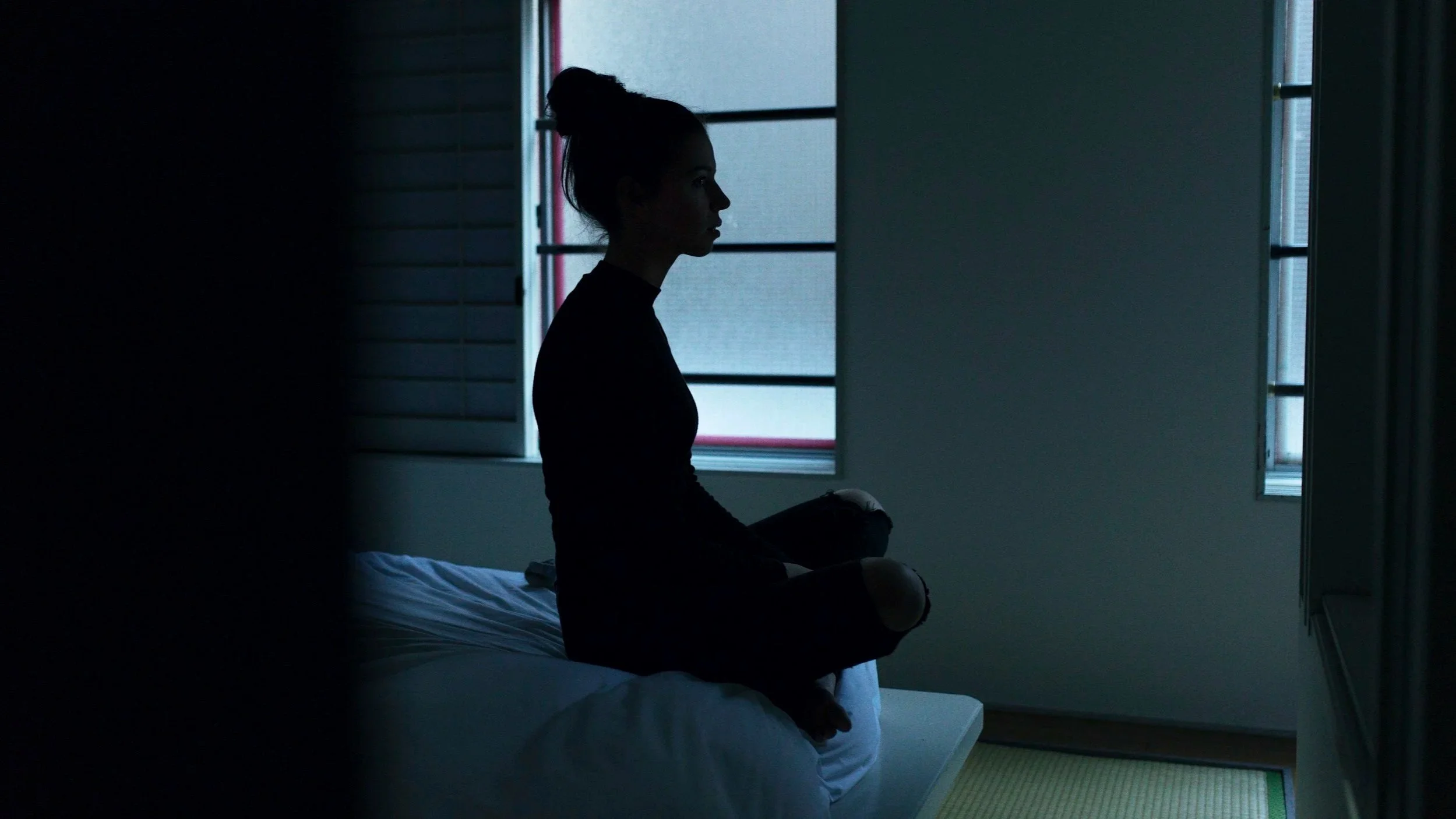
Closing Thoughts: Rest is Important, Especially in Grief
Grieving changes our relationship with everything in our lives—including our sleep. But with helpful rituals, tools, and support, you can gently find your way back to rest.
Whether you’re giving yourself permission to nap, experimenting with insomnia-inspired mindfulness practices, or journaling about your ideal dreams before bed, I know your body and brain will be grateful that you’re prioritizing sleep.
And if you’re ready for even more support navigating grief, coping with heavy emotions, and creating rituals that support your healing, I’d love to see you inside my online course + community, Life After Loss Academy, where you’ll find weekly coaching and helpful tools for rebuilding your life after loss. You can learn more and join any time here.
