6 Ways Your Words Can Support Someone Who Is Grieving
Grief can make reading hard. Want to listen to this article instead? Find its corresponding podcast episode here.
When someone you care about is grieving, it’s easy to feel like words fall short.
You might worry that you’ll say the wrong thing and end up offending them.
Or maybe you’re afraid that you’ll make their grief worse.
Perhaps you’re concerned that you’ll get caught up in an overly emotional conversation and need therapeutic tools you don’t know—or are not qualified to use—to support them properly.
Suffice it to say, there are a lot of reasons that people don’t use their words when someone in their midst is grieving. It’s normal to hesitate, stay quiet, or default to surface-level small talk when grief is in the room.
But something I learned after my mom died—and in ten years supporting of grieving people—is that words are one of the most powerful tools we have to support someone in grief.
Not because they fix anything.
Not because they take anyone’s pain away.
But because of what they create in the space between you and the person who’s navigating loss.
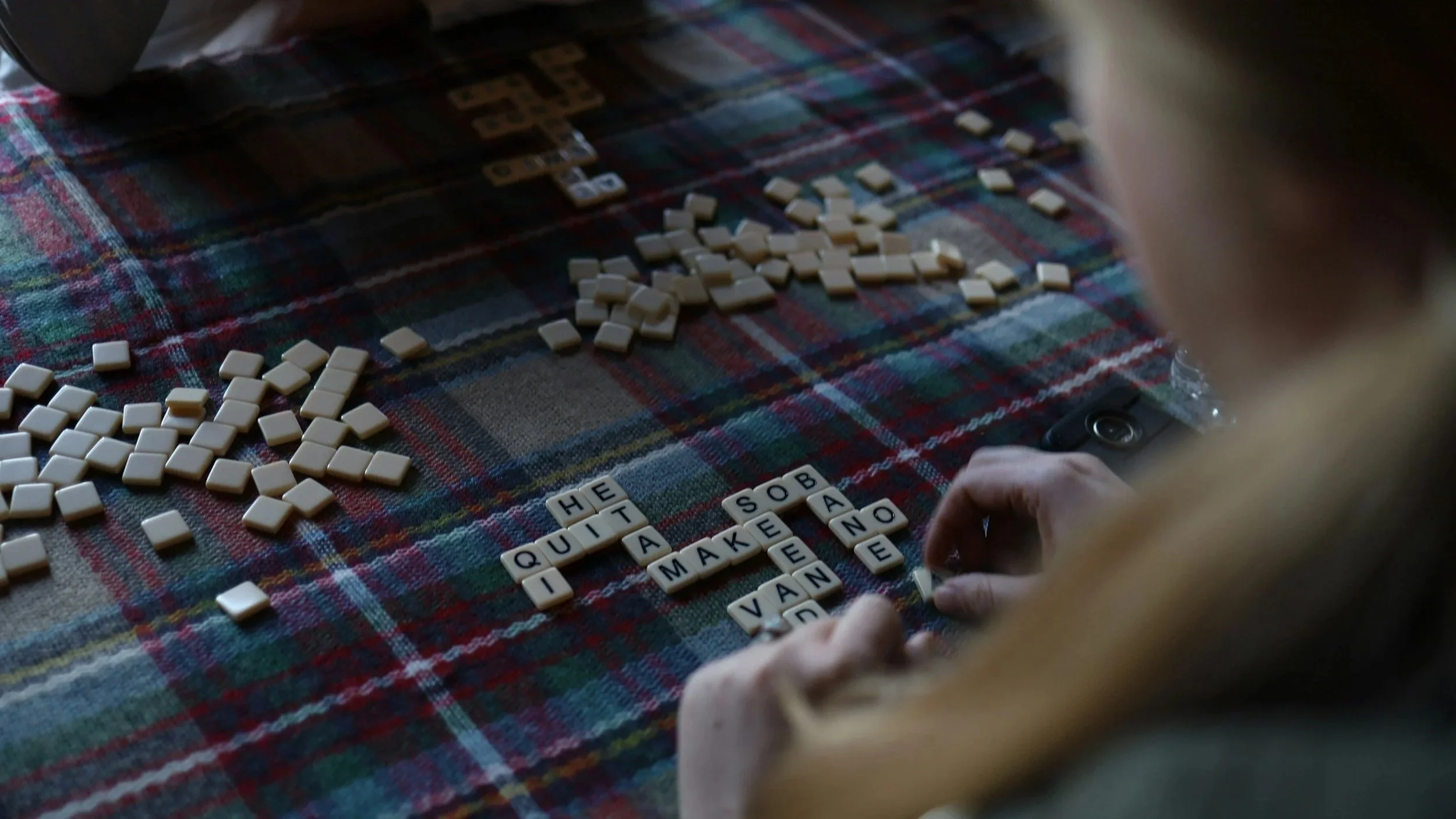
In my book, Of Course I’m Here Right Now: 3 Actually Helpful Things to Say to Someone Grieving, I share what I call the SCRABL structure—six unique ways words work to support someone who is grieving.
Let’s walk through them. Maybe seeing words in this way will give you the confidence to reach out—whether via text, phone, or in-person—to someone you know is facing loss.

1. Words as Springboards (S)
Words don’t have to be deep or long-winded in order to be powerful. Sometimes, their greatest role is simply opening the door to future conversations.
A short text, a gentle check-in, or a simple acknowledgment of your grieving friend’s loss are all small moments that signal: I’m here, and I’ll continue to be here.
Your words become a starting point—an invitation to revisit the topic of grief again and again. They show that you are open to talking about grief beyond the moment of the loss.
This could look like:
“I’m thinking of you today.”
“I haven’t forgotten that you’re grieving.”
“I’m here for you, even as the rest of the world keeps going like nothing happened.”
You’re not just offering words for this interaction or this conversation. You’re creating space for the next one.
2. Words as Community (C)
Loss can make grieving people feel like they no longer belong—whether to their families, friend groups, workplaces, spiritual groups, or community organizations.
In a world that often rushes people to “move on,” your words can quietly push back against that pressure.
When you speak to someone’s grief without trying to minimize or rush it, you remind them: You still have a place here.
This might look like:
“You’ve lost so much; you will not lose me.”
“I (or we) don’t expect you to get over this.”
“I’m not scared of you or your grief. I’m sticking around.”
By using words in this way, language becomes a form of inclusion—a way of saying: You don’t have to hide this part of yourself to belong.
3. Words as Refuge (R)
Kind words can feel like a place to land.
When someone is grieving, their inner world can feel chaotic, disorienting, even unsafe. But language—specifically steady, compassionate, emotionally validating language—can provide a kind of pop-up shelter in the storm of grief.
In Of Course I’m Here Right Now I write:
“When your grieving person hears words that make them feel seen, heard, and understood, they may feel lower stress, decreased isolation, and an increased sense of psychological safety—all very good things to experience when it feels like one’s world is falling apart at the seams.”
This could sound like:
“I can see why you feel that way.”
“Of course. Your reaction makes sense to me.”
“You don’t have to prove or justify your grief when we’re together.”
This is what your words can provide: a moment of relief. A soft place to rest, even if just for a breath or two.
4. Words as Air (A)
Just like air, words are always available to you, which can’t be said for other sympathy-related gifts like casseroles, flowers, gift baskets, or gift cards. Words transcend financial, cultural, and logistical barriers and are free and portable—whether you’re supporting someone in-person or across thousands of miles.
A message. A voicemail. A sentence spoken in passing. These small offerings of language are one of the most accessible ways to show up for someone in grief.
It costs you almost nothing to use them and it requires almost nothing of your grieving person to receive them. Like breath, they’re simple and ever-present.
This might look like:
“I saw this and thought of you.”
“You and your [person who died] are on my mind today.”
“I imagine this season is hard since [loss]. I’m holding you in my heart.”
Like the air we breathe, words that provide comfort in grief are available to us in every moment.

5. Words as Bridges (B)
Grief changes someone’s world in an instant. And when there’s nothing you can physically do to fix their loss or their broken heart, it’s easy to feel helpless.
As I write in Of Course I’m Here Right Now:
“Their loved one cannot be brought back to life. Their spouse cannot un-cheat. Their diagnosis cannot be made to magically disappear.”
This crucial, tender season of life is where words matter most.
Language becomes the bridge between you and the person who is grieving. A way to stay connected across an experience you cannot fully share or solve.
This can sound like:
“I know I can’t fully understand, but I’m here with you through it.”
“Right now, there’s a lot on your plate, and I can see how hard you’re trying to make it through each day.”
“I may not have faced a similar loss, but I care about you. And your feelings make sense to me.”
Through your words, your griever can bring you their anger, their heartbreak, their confusion—and trust that you’ll meet them there. An invisible highway of care forms between you and your bridge to your grieving friend is strengthened each time you talk to them.
6. Words as Lampposts (L)
Long after the initial wave of outreach after a loss, words remain.
They linger in long-term memory. They echo back to grievers in quiet moments. They become something that your grieving friend returns to again and again.
In Of Course I’m Here Right Now I write:
“Many grievers report feeling cared for in the immediate aftermath of a loss, when they’re swimming in casseroles and peace lily plants, but also report a steep drop-off in that feeling of care when those initial gestures aren’t followed up by words. The supporters whom grievers most often remember—and choose to nurture lasting relationships with—are the ones who offer kind words and check-ins, both in the short- and long-term of the timeline of their losses.”
These kind words might look like:
“It’s okay that this loss has changed your life.”
“This is your grief and you can do it your way.”
“I don’t expect you to be okay or normal. What happened wasn’t okay or normal.”
A sentence you say today might become something your griever carries with them months—or years—from now. A small light. A steady presence. A reminder of compassion that didn’t disappear when everything else about their life changed.
Closing Thoughts: Words Are Your Best, Most Powerful Grief Support Tool
Words don’t fix grief. They do something even more important: they create connection, safety, and belonging in the awfulness of it.
If you’ve ever held back because you were afraid of saying the wrong thing or worried about getting in “too deep” with a grieving friend, consider this your invitation to try anyway.
Your words don’t need to be perfect. They just need to be compassionate, validating, and honest.
Get the book on what to say to someone grieving
If you’re ready to deepen your understanding of how to use words in a way that truly supports the people you care about, Of Course I’m Here Right Now will walk you through it—step by step.
It’s the definitive guidebook for what to say when someone—a family member, a friend, a coworker, a client, or a stranger—in your orbit is grieving.
The phrases and scripts inside of it are designed for all types of losses and all timeframes since the loss. So regardless of whether you’re supporting a grieving friend after the death of a parent, a coworker navigating a new diagnosis, or a family member going through divorce, its framework will be useful to you.
Find Of Course I’m Here Right Now here, or wherever you buy books.
